A walk from Grainger Town to the Tyne to experience the energy of the English North East. In this guide, we have gathered the key points so you can organise yourself at your own pace and with more confidence.
Where it is and how Newcastle was born
Newcastle upon Tyne is in North East England, on the north bank of the River Tyne; Gateshead lies opposite, on the south bank. Its Central Station makes it easy to reach by train from other cities, while the Metro connects many neighbourhoods and the coast. The historic centre, Grainger Town and the Quayside can be linked on foot, although there are steep slopes between the river and the high streets.
Before it was Newcastle, the Romans built a fort next to the Tyne. In the Middle Ages, a new Norman fortification gave the city its name. Coal and the shipbuilding industry later transformed the river into a major commercial corridor. The merchant architecture and the bridges speak of that past; today's cultural activity shows a city that has repurposed many of its industrial spaces.
Grainger Market, food and pubs
Grainger Town brings together planned streets and 19th-century buildings, including the elegant curve of Grey Street. In Grainger Market, an indoor market opened in 1835, you can buy something to take away or stop at the stalls for food and local produce. It is a good starting point to understand the city's daily life, not just its monuments.
Look for a stottie, a traditional North East bread, in a bakery or café that offers it. In the centre and around the market there are restaurants for different budgets; the Quayside adds terraces and bars with water views. Avoid choosing just by the photo of the bridge: check the menu and bookings if you are travelling at the weekend.
Ouseburn, to the east of the centre, is another area to explore cafés, creative spaces and pubs in old industrial buildings. If you prefer a quieter night, head back towards the centre after dinner. The music and event programming changes constantly, so it is worth checking venues before heading out.
View tours and tickets with GetYourGuide ↗ (affiliate link)
Galleries, museums and a green break
Cross the Gateshead Millennium Bridge to visit BALTIC Centre for Contemporary Art: it is housed in a former flour mill and hosts changing exhibitions. Nearby, The Glasshouse International Centre for Music hosts concerts and musical activities. On the Newcastle side, Laing Art Gallery offers another art option, while the Great North Museum: Hancock is interesting if you are looking for natural history and archaeology.
If you need to breathe away from the traffic, Jesmond Dene is a wooded valley with paths and water to the north of the centre. You can get there by public transport and dedicate a morning to it that is different from the Quayside. For a longer outing, Tynemouth combines the coast, a castle and a seafront promenade: calculate the Metro time and do not mistake it for a quick visit between two museums.
A balanced route would be the market and Grainger Town in the morning, the castle and riverbank after lunch, and art or music on the other side of the Tyne at the end of the day. Museums may close on certain days; check their websites before organising a day around a specific exhibition.
From the station to Grainger Town
From Newcastle Central Station you can start on foot through Grainger Town, with its classical facades, the indoor Grainger Market and Grey Street. It is worth stopping and looking up: the architecture tells as much of a story as the shops.
Continue towards Newcastle Castle, which recalls the origin of the city's name. If you want to go inside, check the opening times and access conditions before you go.
Quayside and the Tyne bridges
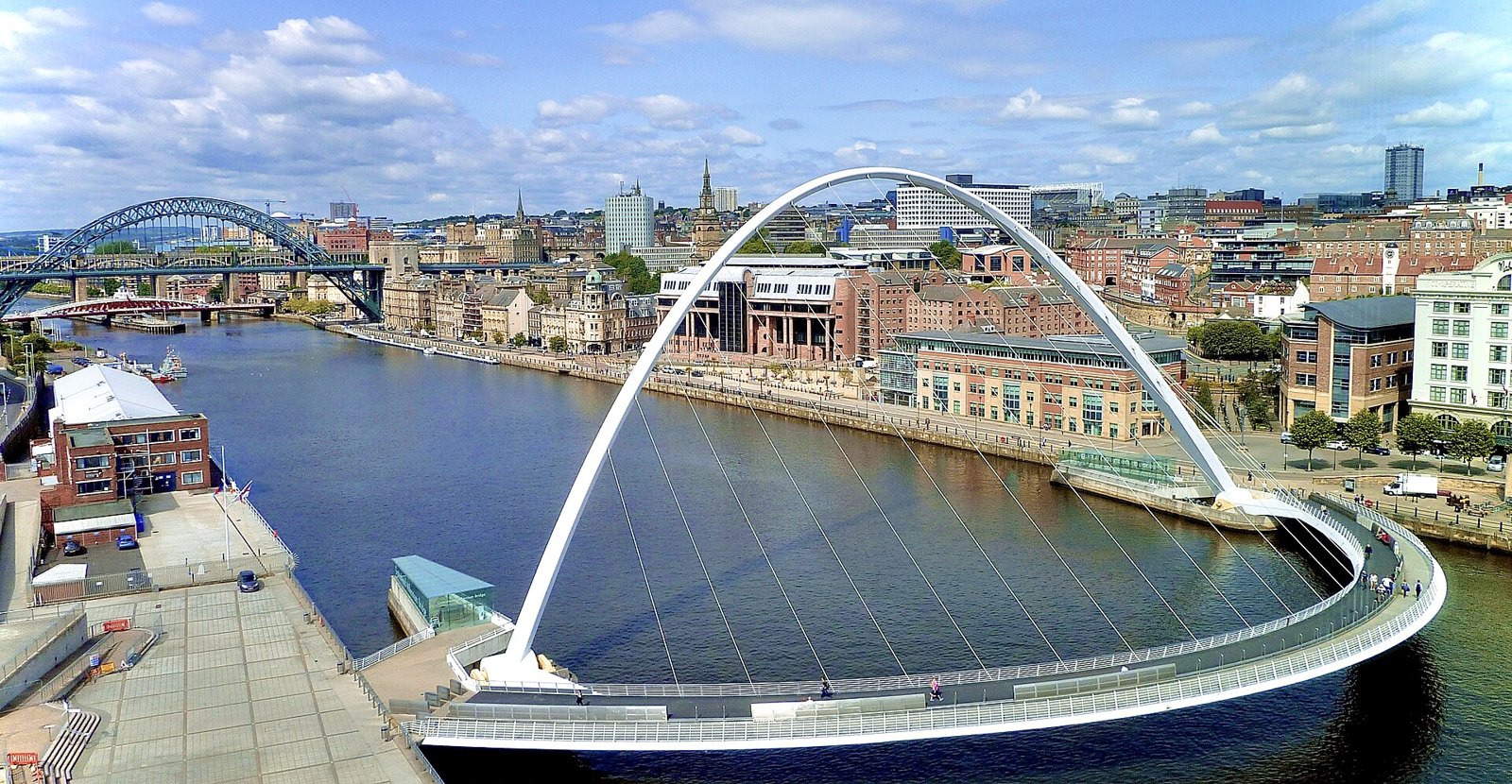
Descend towards the Quayside, the old port front reclaimed as a riverside promenade. You will see the Tyne Bridge and, further east, the Gateshead Millennium Bridge, which can be crossed on foot or by bicycle.
On the other side of the river you are in Gateshead: the BALTIC offers contemporary art and The Glasshouse is a space dedicated to music. Check the current exhibitions and concerts on their respective websites.
The Millennium Bridge does not tilt at a fixed time every day: check the official schedule if you want to see it in motion.
If you have more time
You can explore Ouseburn, a creative neighbourhood to the east of the centre, or visit the Tynemouth coast using the Tyne and Wear Metro. One day allows you to see the centre and Quayside; with another day you can leave the city without rushing.
Newcastle is also a useful railway base for visiting Durham, Hexham and Corbridge. Check services and potential engineering works before setting off.